德国法兰克福 | Frankfurt, Germany
德国法兰克福 | Frankfurt, Germany
法兰克福:
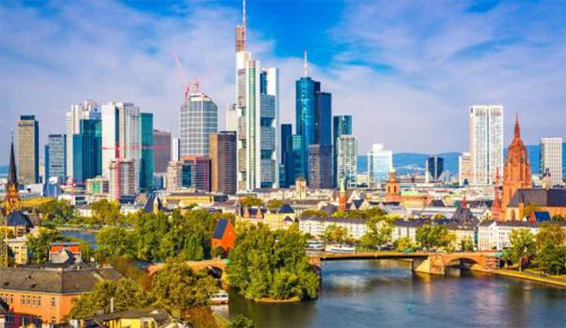
美因河畔法兰克福(德语:Frankfurt am Main),简称法兰克福,是德国第五大城市。法兰克福位于同名河畔陶努斯山麓,与邻近的美因河畔奥芬巴赫市形成了一个连续的城市群。法兰克福是德国重要工商业、金融和交通中心,被誉为“莱茵河畔的曼哈顿”。它也是德国最大航空站、铁路枢纽、重要的国际展览和金融中心。
法兰克福同时也是一座文化名城。这里是世界文豪歌德的故乡,歌德的故居就在市中心。法兰克福有17个博物馆和许多的名胜古迹,古罗马人遗迹、棕榈树公园、黑宁格尔塔、尤斯蒂努斯教堂、古歌剧院等都值得游人一看。这座城市既富于传统又充满现代感,既有商业又有文化气息,既忙碌又安逸。
Frankfurt, officially Frankfurt am Main, is the most populous city in the German state of Hesse. Located in the foreland of the Taunus on its namesake Main, it forms a continuous conurbation with the neighboring city of Offenbach am Main, and its urban area has a population of over 2.3 million. Frankfurt was a city state, the Free City of Frankfurt, for nearly five centuries, and was one of the most important cities of the Holy Roman Empire, as a site of Imperial coronations. Frankfurt is a global hub for commerce, culture, education, tourism and transportation, and is the site of many global and European corporate headquarters. Frankfurt is home to influential educational institutions, including the Goethe University with the Universitätsklinikum Frankfurt (de) (Hesse's largest hospital), the FUAS, the FUMPA, and graduate schools like the FSFM. The city has many notable green areas and parks, including the Wallanlagen, Volkspark Niddatal, Grüneburgpark, the City Forest, two major botanical gardens (the Palmengarten and the Botanical Garden Frankfurt) and the Frankfurt Zoo.
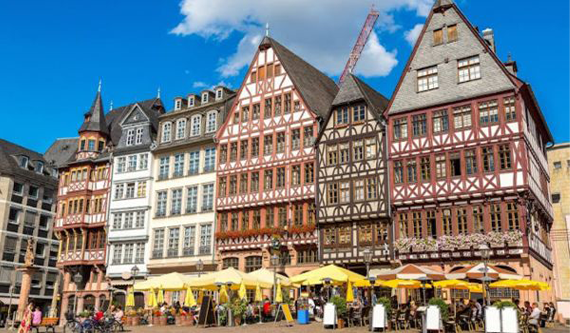
罗马广场是德国法兰克福的一个公共空间。它位于法兰克福旧市政厅建筑群前,自 15 世纪以来一直是法兰克福市政府的所在地。作为众多帝国加冕典礼、贸易展览会和圣诞市场的举办地,该广场是中世纪阿尔特施塔特(老城区)的历史中心,如今也是热门的旅游目的地。另一个历史悠久的广场保罗广场位于北面。老圣尼古拉斯教堂和历史博物馆位于南部。再往前就是美因河,一条位于美因河畔的海滨长廊。广场西侧是重建的罗马中世纪建筑。东边是Dom-Römer 工程,再往前就是法兰克福大教堂。
Römerberg is a public space in Frankfurt, Germany. It is located in front of the Römer building complex, seat of the Frankfurt city administration since the 15th century. As the site of numerous imperial coronations, trade fairs and Christmas markets, the square is the historic heart of the medieval Altstadt and today a popular tourist destination. Paulsplatz, another historic square, is to the north. The Old St Nicholas Church and Historical Museum are to the south. Beyond that is the Mainkai, a promenade by the River Main. On the west side of the square is the reconstructed Römer medieval building. To the east is the Dom-Römer Project, and beyond that is Frankfurt Cathedral.
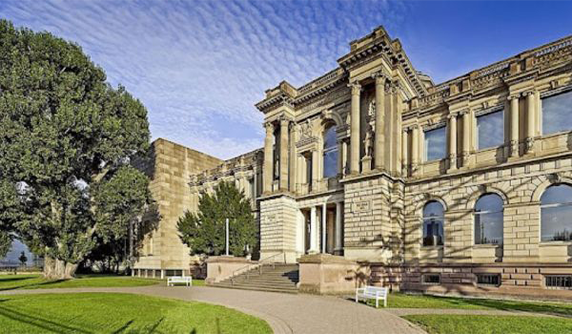
施泰德尔的正式名称是施泰德尔艺术博物馆,是法兰克福的一座艺术博物馆,拥有德国最重要的藏品之一。施泰德尔博物馆拥有 3,100 幅绘画、660 件雕塑、4,600 多张照片以及 100,000 多幅素描和版画。它拥有约 7,000平方米的展示空间和拥有 115,000 本书的图书馆。2012 年,施泰德尔博物馆被德国艺术评论家协会AICA授予年度博物馆称号。同年,博物馆创下历史最高参观人数,达到 447,395 名参观者。
The Städel is an art museum in Frankfurt, with one of the most important collections in Germany. The Städel Museum owns 3,100 paintings, 660 sculptures, more than 4,600 photographs and more than 100,000 drawings and prints. It has around 7,000 m2 (75,000 sq ft) of display and a library of 115,000 books. In 2012, the Städel was honoured as Museum of the Year by the German art critics association AICA. In the same year the museum recorded the highest attendance figures in its history, of 447,395 visitors.

法兰克福古歌剧院是位于德国黑森州美因河畔法兰克福的一座音乐厅,它位于市中心的中央商务区内。今天的古歌剧院建于1880年,当时是该市的歌剧院,1944年被炸弹炸毁。1970年代重建为音乐厅,有一个大礼堂和较小的场地,于1981年开放。大楼前的广场仍被称为歌剧院广场。许多重要的作品都是在法兰克福歌剧院时首次上演的,其中包括1937 年施雷克的《Der ferne Klang》和卡尔·奥尔夫的《布兰诗歌》 。
Alte Oper is a concert hall in Frankfurt am Main, Hesse, Germany. It is located in the inner city, Innenstadt, within the banking district Bankenviertel. Today's Alte Oper was built in 1880 as the city's opera house, which was destroyed by bombs in 1944. It was rebuilt in the 1970s as a concert hall with a large hall and smaller venues, opened in 1981. The square in front of the building is still known as Opernplatz. Many important works were performed for the first time when it was Frankfurt's opera house, including Schreker's Der ferne Klang and Carl Orff's Carmina Burana in 1937.